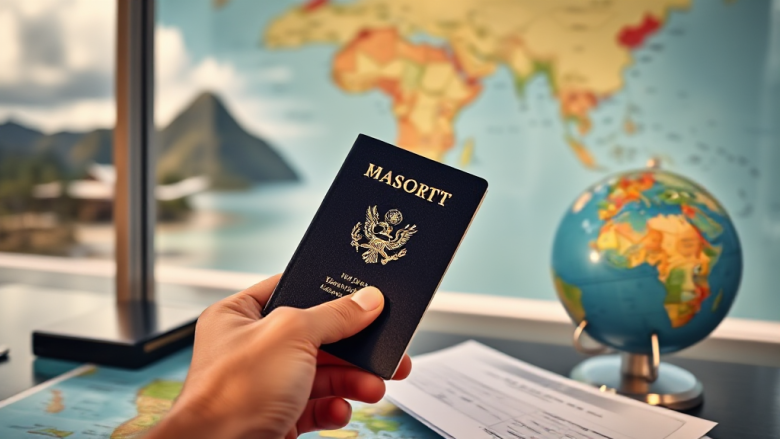
Vanuatu Citizenship vs Residency: What the Program Does and Does Not Grant
One of the most persistent misunderstandings in the world of investment migration is the assumption that obtaining citizenship in one country automatically gives you residency rights somewhere else. Readers who begin researching Vanuatu often arrive with a blurred mental picture: they imagine that a Vanuatu passport somehow unlocks the right to live and work in Europe, Australia, or New Zealand. That picture is not accurate, and the confusion has real consequences for people making expensive, life-changing decisions. This article sets out plainly what the Vanuatu citizenship program grants, what it does not grant, how residency alternatives differ, and how the two concepts interact in practice.
Before going further, it helps to anchor the discussion in a reliable reference point. The team behind https://vanuatupassportvisafreecountries.com/ maintains an informational overview of where a Vanuatu passport can take its holder, including visa-free entries, visa on arrival, e-Visa options, and the stay limits that apply in different regions. That kind of reference material is useful precisely because it separates mobility from residency, two ideas that are frequently merged in casual conversation.
What Vanuatu Citizenship Actually Grants
Citizenship is a legal status. When you become a citizen of Vanuatu, you become a national of that country. You hold a Vanuatu passport, you can enter and live in Vanuatu itself without restriction, and you carry the international travel rights attached to that document. Those travel rights are the main practical benefit for most applicants. A Vanuatu passport provides access to a range of destinations under visa-free, visa-on-arrival, or e-Visa arrangements, subject to the entry rules of each country at the time of travel.
What citizenship does not do is create a second nationality or a residence permit in any other jurisdiction. A Vanuatu passport is a Vanuatu document. It does not make you an Australian resident, a New Zealand resident, a Schengen resident, or a UK resident. It does not grant the right to work in those places, to enroll in their public healthcare systems, or to remain there indefinitely. It grants you the ability to travel to certain countries under the conditions those countries set, and that is a meaningfully narrower thing than residency.
It is also worth noting that citizenship is generally permanent, while residency permits are usually time-limited and conditional. A citizen cannot normally have their status revoked for failing to spend enough time in the country, whereas a resident who breaches permit conditions can lose their right to stay. This permanence is part of why citizenship programs attract applicants, but it is also why the distinction from residency matters so much.
What the Vanuatu Program Does Not Grant
The Vanuatu citizenship program does not grant residency in any country other than Vanuatu. It does not grant a European Union residence card, a Schengen long-stay permit, a UK right to remain, or any automatic settlement right in Australia or New Zealand. Applicants who assume otherwise are often confusing citizenship by investment with residency by investment, which is a different product offered by different countries under different rules.
Nor does the program grant visa-free access uniformly across every destination in the world. Entry conditions vary widely. Some countries allow Vanuatu passport holders to enter without a visa for a set number of days. Others require a visa on arrival or an electronic travel authorization. Others still require a visa applied for in advance. Stay limits differ from one jurisdiction to the next, and they can change with little notice. The informational resource at https://vanuatupassportvisafreecountries.com/ exists in part to make those variations easier to check, because treating all visa-free destinations as identical is a common and costly mistake.
Another limitation is that citizenship does not grant any right to consular protection from a country of which you are not a national. A Vanuatu passport holder travelling abroad is entitled to Vanuatu consular assistance, not Australian, British, or European consular assistance, even if those countries maintain embassies in the region. This matters in emergencies, and it is a detail that applicants sometimes overlook until they need it.
Residency Alternatives and How They Differ
Residency is a permission to live in a country, usually for a defined period and often tied to conditions such as investment, employment, family ties, or study. Many countries operate residence-by-investment schemes, and these are frequently confused with citizenship programs. A golden visa in a European country, for example, typically grants a residence permit that may later be convertible to permanent residence or citizenship after a qualifying period. That is a fundamentally different structure from a direct citizenship program.
The practical differences are substantial. A residence permit usually requires physical presence in the host country for a minimum number of days per year. It may restrict the holder’s ability to work, may require renewal, and may be revoked if conditions are breached. A citizenship, by contrast, is not conditional on ongoing presence and does not expire. The trade-off is that citizenship programs are generally more expensive and subject to stricter due diligence, while residency programs can be more accessible but come with ongoing obligations.
Some applicants pursue both. They may obtain residency in a country where they intend to live and work, and separately obtain Vanuatu citizenship for the travel mobility it provides. These are complementary, not competing, choices. Understanding which one you actually need is the first step in avoiding an expensive mismatch between your goals and the program you select.
How Citizenship and Residency Interact in Practice
In day-to-day travel, the two concepts interact at the border. When a Vanuatu passport holder arrives in a visa-free destination, they are admitted as a visitor, not as a resident. They are subject to the stay limit that applies to visitors, and they must leave when that limit expires unless they obtain a separate permission to remain longer. Holding citizenship in Vanuatu does not change the fact that entry is granted under the host country’s visitor rules.
This is why stay limits deserve attention. A destination that permits a ninety-day stay is not the same as a destination that permits thirty days, and neither is the same as a destination that requires a visa in advance. Travellers who plan multi-country itineraries need to track these limits carefully, because overstaying a visitor permission can lead to fines, entry bans, or difficulties on future applications. The reference material at https://vanuatupassportvisafreecountries.com/ covers stay-limit and Schengen and UK entry guidance for Vanuatu passport holders, which is exactly the kind of detail that separates a smooth trip from a disrupted one.
It is also important to remember that entry rules are not static. Countries revise their visa policies, adjust stay limits, and introduce or withdraw electronic authorizations. A destination that was visa-free last year may require a visa this year. For that reason, checking current conditions before booking travel is not optional; it is part of responsible planning. Citizenship gives you a document with a certain level of mobility, but that mobility is defined by the rules of other countries, and those rules are outside the control of any passport holder.
Frequently Asked Questions
Does Vanuatu citizenship give me the right to live in Europe?
No. Vanuatu citizenship does not grant residency in any European country. It may allow visa-free or visa-on-arrival entry to certain European destinations for a limited period as a visitor, but it does not confer the right to live, work, or settle there. Residency in Europe requires a separate permit obtained under that country’s own immigration rules.
Is Vanuatu citizenship the same as a residence permit?
No. Citizenship is a permanent legal status as a national of Vanuatu. A residence permit is a time-limited permission to live in a country, usually subject to conditions such as physical presence or investment. They are different legal instruments with different rights, obligations, and durations.
Can I work in a visa-free destination using my Vanuatu passport?
Generally no. Visa-free entry is usually granted for tourism, business meetings, or short visits, not for employment. Taking up work typically requires a work permit or a residence permit that authorizes employment. Relying on visa-free entry to work in a destination can lead to removal and future entry bans.
How do I check the current stay limit for a destination?
Stay limits change, so the safest approach is to verify the current rule shortly before travel. A consolidated reference such as https://vanuatupassportvisafreecountries.com/ can help you compare visa-free, visa-on-arrival, and e-Visa conditions alongside stay limits, but you should always confirm with the destination’s official immigration source before departure.
Does holding a Vanuatu passport affect my existing citizenship?
Vanuatu permits dual citizenship, so in most cases obtaining Vanuatu citizenship does not require you to give up an existing nationality. However, some countries do not permit dual citizenship, so you should check the rules of your current country of citizenship before proceeding.
The central point bears repeating: citizenship and residency are different things, and the Vanuatu program grants the former, not the latter. It gives you a Vanuatu passport with a defined set of travel permissions, and it gives you the right to live in Vanuatu. It does not give you the right to live anywhere else, and it does not make every destination equally accessible. Applicants who understand that distinction before they commit are far better positioned to choose a program that matches their actual goals, whether those goals involve travel mobility, a second nationality, or a genuine change of residence.